

What Happens to Your VA Loan When You Get PCS Orders?
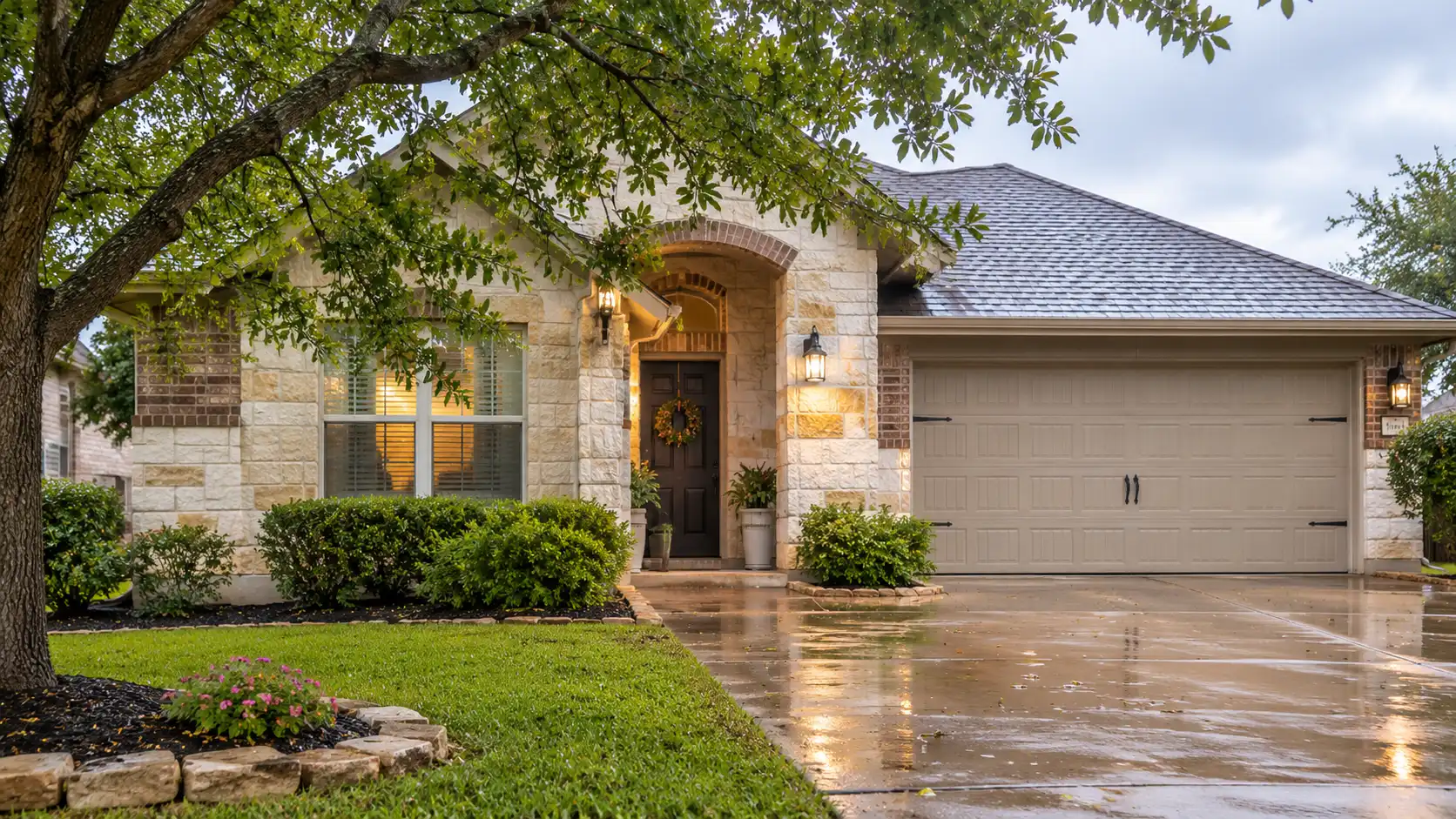
PCS orders have a way of turning your plans upside down.
One minute, you’re settled into your home, and the next you’re researching a new duty station, figuring out school options, and wondering how you’re going to move everything you own across the country.
And somewhere in the middle of all that, there’s a pretty important question:
What happens to the house you bought with your VA loan?
Do you have to sell it? Can you rent it out? Can you use your VA loan benefit again at your next duty station? And what happens if you have a mortgage rate that’s significantly lower than what’s available today?
As a military spouse and San Antonio Realtor who works with relocating military families, I know these decisions can get complicated quickly.
But there’s something I want military homeowners to understand right from the beginning:
Just because you can keep your VA loan doesn’t necessarily mean you should keep your house.
Those are two different decisions.
The first involves understanding your existing mortgage and how your VA loan entitlement may affect your next purchase. The second involves deciding whether keeping your current property makes financial and practical sense for your family.
Let’s walk through both.
Do You Have to Sell Your Home When You PCS?
No. Receiving PCS orders doesn’t automatically require you to sell a home purchased with a VA loan.
When you originally purchased the property, you were required to meet the VA’s occupancy requirements. That generally means you intended to use the property as your primary residence.
But military life changes, sometimes with very little notice.
If you legitimately purchased and occupied your home as your primary residence and later receive PCS orders, the VA doesn’t automatically require you to sell simply because you’re moving.
The requirement to intend to occupy a home when you purchase it is not the same as a requirement to live there forever.
You should still review your loan documents and discuss your circumstances with your mortgage servicer, especially if you purchased recently or your original occupancy plans changed.
Can You Rent Out a Home Purchased With a VA Loan?
In many cases, yes.
If you’ve been living in your home and later receive PCS orders, renting it out may be an option.
Maybe you have a particularly favorable mortgage rate. Maybe you expect to return to San Antonio someday. Or perhaps you see an opportunity to keep the property as a long-term investment.
But there’s an important difference between being allowed to rent your house and deciding that renting is actually a good financial choice.
Before turning your home into a rental, you’ll want to evaluate the numbers carefully, including property management, maintenance, vacancy periods, insurance, taxes, and potential repairs.
And if you’re moving across the country or overseas, you’ll need a realistic plan for managing the property from a distance.
Because unfortunately, water heaters don’t check your deployment schedule before deciding to quit.
We’ll come back to the financial side of this decision in a moment.
Can You Use Your VA Loan Again at Your Next Duty Station?
Possibly, and this is where many military homeowners are pleasantly surprised.
Your VA home loan benefit isn’t necessarily a one-time benefit.
Depending on how much VA loan entitlement you have available, you may be able to purchase another primary residence using a VA loan, even while you still own your previous home.
However, having an existing VA loan can affect how much entitlement remains available for another purchase.
And having remaining entitlement doesn’t automatically mean you’ll qualify for another zero-down mortgage.
Your lender will also consider your income, existing debts, the proposed purchase price, and other financial qualifications.
If you’re considering keeping your current home and buying another, talk with a knowledgeable VA lender before making assumptions about what you can afford.
Ideally, that conversation should happen before you’ve committed to either selling or renting your existing home.
What Happens to Your VA Loan Entitlement If You Sell?
When you sell a home purchased with a VA loan and the loan is paid off in full, you can generally request restoration of the entitlement that was used for that purchase.
That restored entitlement may then be available for a future VA home purchase, assuming you continue to meet the program’s eligibility and lending requirements.
This is one reason selling your current home can simplify the process of purchasing at your next duty station.
But entitlement restoration isn’t simply triggered by receiving PCS orders.
There are also special circumstances involving loan assumptions and certain paid-off VA loans where restoration may be possible.
Your lender can review your Certificate of Eligibility and help you understand what entitlement is currently available.
Can Someone Assume Your VA Loan When You Sell?
Potentially, yes.
VA-backed mortgages can be assumable, meaning a qualified buyer may be able to take over the existing mortgage under its current terms, subject to the required approval process.
If your mortgage has an attractive interest rate, that could be an appealing feature for certain buyers.
However, the buyer must qualify for the assumption, obtain the appropriate approval, and have a way to cover the difference between the outstanding mortgage balance and the agreed purchase price.
For military sellers, there’s another important consideration: what happens to your VA loan entitlement?
If an eligible VA buyer assumes your loan and substitutes their own entitlement, restoration of your entitlement may be possible.
If your entitlement remains tied to the loan, however, that can affect your ability to use your VA benefit again.
You’ll also want to ensure you receive the appropriate release of liability.
A VA loan assumption can be a valuable selling strategy, but it needs to be evaluated carefully.
Should You Keep Your San Antonio Home When You PCS?
Now we’ve covered what you can do with your VA loan. Let’s talk about what you should consider doing with your home.
This is where I think military homeowners need to separate the loan rules from the real estate decision.
And lately, one of the biggest conversations I’ve been having with military homeowners in San Antonio involves a difficult financial reality.
What If You Don’t Have Enough Equity to Sell?
Many military families purchase homes using VA financing with little or no down payment.
That’s one of the tremendous benefits of the VA loan program, but it also means homeowners may start with relatively little equity.
Then, three years later, PCS orders arrive.
Depending on what the housing market has done during those three years, how much principal they’ve paid down, and what it costs to sell, they may discover they don’t have enough equity to cover their selling expenses.
In some cases, they may actually need to bring money to the closing table.
And that’s when the conversation gets especially interesting.
Because the alternative is often to keep the house and rent it out.
But what if the rent doesn’t cover the mortgage payment and other expenses?
Would you rather bring money to closing today, or lose money a little at a time while keeping the house?
That’s not a hypothetical question for many military homeowners. It’s a very real financial decision.
And there’s no universally correct answer.
Paying Up Front Versus Losing Money Over Time
Let’s say selling your home would require you to bring $10,000 to closing.
That’s a difficult check to write, especially when you’re already facing the expenses associated with a military move.
Now let’s say you could rent the property, but after accounting for your mortgage payment and other predictable expenses, you’d be paying an additional $300 per month out of pocket.
Over three years, that’s $10,800 in negative cash flow.
And that doesn’t include an unexpected HVAC replacement, a significant plumbing repair, a period without a tenant, or the expenses you might face getting the property ready to rent again after someone moves out.
Of course, renting also means you’re continuing to pay down your mortgage, and the property could appreciate over time.
Those are meaningful considerations.
But appreciation isn’t guaranteed, and the principal you’re paying down doesn’t necessarily help you cover the monthly expenses you’re facing right now.
There’s also the uncertainty of what condition the home will be in when your tenants move out.
Even with responsible tenants and good property management, homes experience wear and tear. Sometimes repairs are minor. Other times, the expenses can be significant.
Selling may mean accepting a known expense today. Renting may mean accepting smaller, ongoing expenses along with financial risks that are harder to predict.
Neither option is automatically better.
The right decision depends on your financial reserves, your comfort with risk, and your long-term plans for the property.
What About That Great VA Mortgage Rate?
This is another factor that can make the decision especially difficult.
If you purchased your home when mortgage rates were considerably lower, giving up that rate can feel like walking away from something valuable.
And it may be valuable.
But a great mortgage rate doesn’t automatically make a home a great rental property.
You still need to consider realistic rental income, maintenance, vacancy risk, and whether keeping the property affects your ability to purchase another home.
Sometimes keeping that low-rate mortgage makes sense as part of a long-term investment strategy.
Other times, selling provides more financial flexibility.
The mortgage rate is one piece of the decision, not the entire decision.
Don’t Forget the Tax Implications
There’s another piece of this conversation I think military homeowners should explore before deciding to sell or rent: taxes.
Turning a primary residence into a rental property can change how income and expenses are reported on your tax return.
Rental income, eligible expenses, depreciation, and the potential tax consequences of eventually selling the property can all affect the financial picture.
There may also be special considerations for military homeowners related to the exclusion of gain on the sale of a primary residence.
This is where I strongly recommend having a conversation with a CPA or qualified tax professional.
A property that looks like a financial loss when you’re comparing monthly rent to your mortgage payment may look different when you consider the broader tax picture.
And keeping the property for several years could create tax consequences when you eventually sell.
Your Realtor can help you understand the property’s market value, likely selling expenses, and realistic rental income. Your lender can explain your mortgage and VA entitlement options. A CPA can help you evaluate the tax implications.
I think all three perspectives are valuable when you’re making a decision that could affect your finances for years.
What If Selling Isn’t Financially Possible?
If selling your home would require more cash than you have available, it’s important to understand your options before assuming renting is the only solution.
Start by reviewing the property’s realistic market value, your mortgage payoff, and estimated selling expenses.
If you’re experiencing financial hardship and selling won’t cover the loan balance, you may also need to discuss available assistance or loss-mitigation options with your mortgage servicer.
A short sale may be possible in certain circumstances, but it requires approval and can have consequences for your finances and future VA loan entitlement.
This isn’t something I’d recommend navigating based on general internet advice.
It’s a situation where you want your mortgage servicer and an experienced real estate professional helping you understand the available options before you make a decision.
When Should You Start Planning?
Ideally, as soon as you have a reasonably clear picture of your upcoming move.
You don’t necessarily need finalized orders to begin researching your options.
For homeowners considering selling, that may mean reviewing comparable sales, evaluating repairs, estimating selling expenses, and planning around your PCS timeline.
For homeowners considering renting, it may mean reviewing rental comparables, speaking with property managers, evaluating insurance coverage, and understanding what it would take to prepare the home for tenants.
And if you’re hoping to use your VA loan benefit again, this is also a good time to have a lender review your entitlement and purchasing options.
The more you understand before your timeline gets tight, the more flexibility you’re likely to have.
PCS moves already come with enough moving parts. Your real estate strategy shouldn’t be something you’re forced to figure out at the last minute.
The Bottom Line
Getting PCS orders doesn’t automatically mean you have to sell your home or give up your existing VA loan.
Depending on your circumstances, you may be able to keep your San Antonio home as a rental, use remaining VA entitlement to purchase another primary residence, or sell your current home and request restoration of your entitlement.
But understanding what you’re allowed to do is only half the conversation.
The more important question is what makes sense for your family.
For military homeowners with limited equity, that decision can be especially difficult.
Sometimes the choice isn’t between walking away with a profit and building long-term wealth through a rental.
Sometimes it’s between paying money to sell today and accepting the possibility of ongoing losses and unexpected expenses if you keep the home.
And those are conversations worth having before your PCS timeline becomes urgent.
As a military spouse and San Antonio Realtor, I understand that PCS decisions involve more than real estate. You’re balancing timelines, finances, family needs, and a whole lot of uncertainty.
If you own a home in the San Antonio area and have PCS orders on the horizon, I’d be happy to help you look at what your home could sell for, what it might realistically rent for, and how those options compare.
Your VA lender can help you understand your loan and entitlement options. A CPA can help you evaluate the tax implications. I can help you evaluate the real estate side of the decision.
Because the goal isn’t simply to figure out whether you can keep your house. It’s to make sure the decision you make about it puts your family in the strongest possible position for whatever comes next.

Jennifer Anderson is a military-friendly Realtor in San Antonio who specializes in helping active-duty and veteran families navigate PCS moves and home buying on the far west side of the city. As a military spouse, she brings firsthand experience with VA loans, relocation timelines, and the realities military families face when moving to or within San Antonio.
Social Cookies
Social Cookies are used to enable you to share pages and content you find interesting throughout the website through third-party social networking or other websites (including, potentially for advertising purposes related to social networking).