

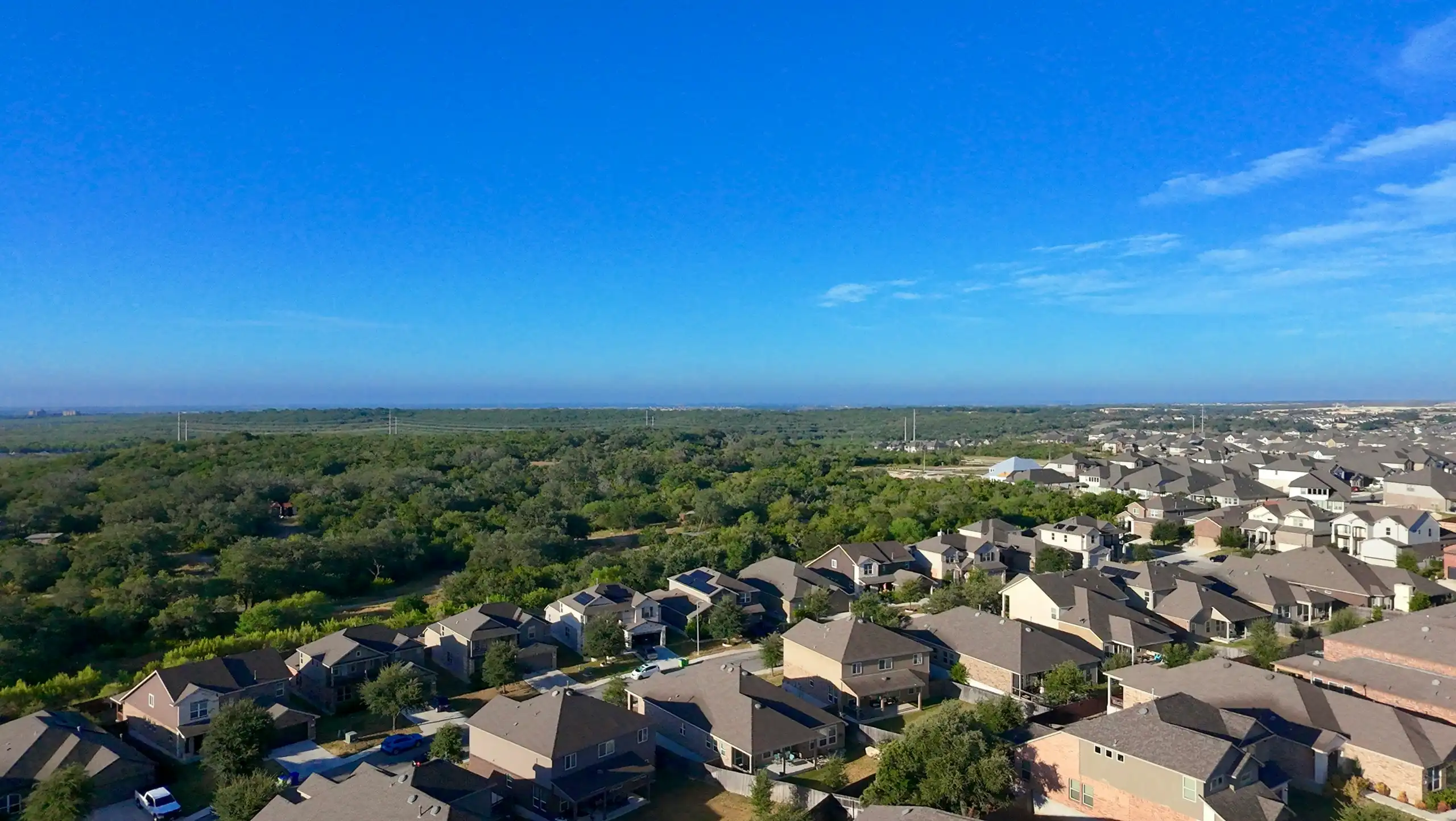
When people talk about Texas real estate, the loudest conversations usually focus on Austin’s price swings, Dallas-Fort Worth’s rapid expansion, or Houston’s sheer size.
San Antonio rarely makes headlines – and that’s part of why its real estate market has remained so steady.
“Outperform” doesn’t always mean the fastest appreciation or the hottest headlines. In real estate, it often means consistency, affordability, and resilience. By those measures, San Antonio has continued to quietly outperform many other major Texas cities.
Here’s why.
Outperformance Isn’t About Flash – It’s About Fundamentals
Housing markets perform best over time when they’re built on strong fundamentals, not speculation.
San Antonio’s growth has been:
- Steady rather than explosive
- Broad-based rather than concentrated in one industry
- Less dependent on extreme price acceleration
That foundation has helped the city weather interest rate changes, economic shifts, and migration waves with less volatility than other Texas metros.
In real estate terms, outperforming means holding value more consistently, avoiding extreme volatility, and remaining accessible to buyers over time.
Affordability as a Competitive Advantage
One of San Antonio’s biggest advantages is still affordability.
Compared to Austin, Dallas-Fort Worth, and Houston:
- Entry-level home prices remain more accessible
- Monthly payments are more manageable relative to income
- Buyers face less pressure to stretch beyond comfort
Affordability isn’t just a buyer benefit – it supports market stability. When buyers aren’t over-leveraged, markets are less likely to experience sharp corrections.
→ Market Value vs. Property Value: What San Antonio Homeowners Need to Know
This has helped San Antonio maintain demand even as interest rates have fluctuated.
Population Growth Without Extreme Volatility
San Antonio continues to grow, but it hasn’t experienced the same boom-and-bust cycles seen in other Texas cities.
Growth here has been driven by:
- Long-term relocations
- Military presence
- Job diversification
- Families looking for sustainable cost of living
→ Moving to San Antonio from Out of State? Here’s What Surprises People Most
Instead of rapid spikes followed by pullbacks, San Antonio has seen more consistent absorption, which supports healthier price trends over time.
Economic Diversity – Including Military Stability
San Antonio’s economy isn’t dependent on a single sector.
Key contributors include:
- Healthcare
- Education
- Cybersecurity and technology
- Tourism
- Military installations
Joint Base San Antonio plays a particularly important role. Military employment provides a level of stability that many other markets don’t have, helping smooth out economic cycles and support consistent housing demand.
That stability shows up in real estate performance.
A Housing Supply That’s Less Constrained
Unlike some Texas cities where supply is heavily restricted, San Antonio has been able to expand housing more flexibly.
This matters because:
- Supply constraints can amplify price volatility
- Rapid appreciation often outpaces wages
- Buyers are forced into increasingly competitive situations
San Antonio’s ability to add housing has helped prevent extreme shortages while still supporting appreciation – a balance many markets struggle to achieve.
Livability That Supports Long-Term Demand
While this isn’t a lifestyle post, livability still plays a role in market performance.
San Antonio offers:
- A lower cost of living relative to other metros
- Shorter commutes for many residents
- Master-planned communities and established neighborhoods
- Access to amenities without constant congestion
When a city is livable long-term, demand tends to be more durable – and that durability supports housing stability.
How This Shows Up in Real Estate Performance
When you look at San Antonio’s real estate performance over time, the patterns are clear:
- Fewer extreme price swings
- More sustainable appreciation
- Strong owner-occupant demand
- Less speculative pressure
That doesn’t mean San Antonio is immune to market cycles – no city is. But it does mean the market has historically adjusted more gradually than some of its Texas counterparts.
→ 2026 Housing Market Outlook: San Antonio Edition
The Bottom Line
San Antonio continues to outperform not because it’s flashy, but because it’s balanced.
Affordability, economic diversity, steady population growth, and livability have combined to create a real estate market that’s more resilient and predictable than many other Texas cities.
For buyers, sellers, and re-locators alike, that consistency matters. In real estate, stability is often the quiet advantage – and it’s one San Antonio continues to offer.

Jennifer Anderson is a San Antonio Realtor providing local market insights with a focus on far west side neighborhoods and the needs of military and relocating families. She helps clients interpret market data in practical terms so they can make confident buying and selling decisions.
Social Cookies
Social Cookies are used to enable you to share pages and content you find interesting throughout the website through third-party social networking or other websites (including, potentially for advertising purposes related to social networking).