

A First-Time Buyer’s Guide (Without the Legal Jargon)
Earnest Money Sounds Scary – But It Doesn’t Have to Be
If you’re buying your first home in Texas, chances are someone has mentioned earnest money… and then quickly moved on like you were supposed to already understand it.
You’re not alone.
I see first-time buyers – both civilian and military – get nervous about earnest money all the time because it involves real dollars and real risk if it’s misunderstood.
The good news?
In Texas, earnest money is actually very structured, very predictable, and very manageable when you understand how the contract works.
Let’s break it down in plain English.
You’re Not the Only One Asking This
I was recently a guest on The Goode Show with Surinder Goode, and during our conversation she said something that made me smile – because I hear it all the time from first-time buyers:
“What is earnest money? I don’t even know what it means.”
Real estate has its own language, and earnest money is one of those terms that gets thrown around without much explanation – especially for military spouses and first-time buyers who are already navigating a lot of moving pieces.
If you want to hear that conversation and why understanding these terms early makes such a difference, you can watch the full episode here:
👉 The Goode Show: Interviewing Jennifer Anderson
What Is Earnest Money in Texas?
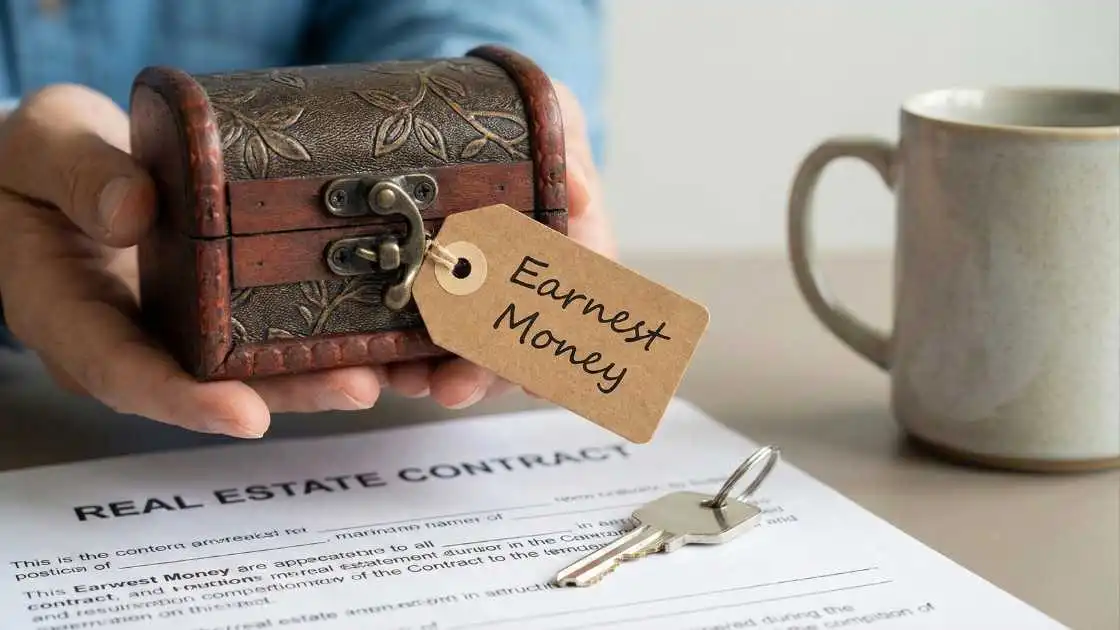
Earnest money is a good-faith deposit a buyer provides when making an offer on a home.
In Texas:
- It’s written into the contract
- It’s owed within three days of contract execution
- It’s held by the title company or escrow agent – not the seller
Earnest money shows the seller you’re serious, but it is not meant to punish buyers or trap them.
How Much Earnest Money Do Buyers Usually Pay?
There is no set rule in Texas for how much earnest money you must put down, it’s a negotiable term.
That said, most earnest money amounts are influenced by:
- Purchase price
- Market conditions
- Seller expectations
- Strength of the offer
In many cases, earnest money is far less intimidating than buyers expect, and it’s structured strategically – not emotionally.
The Most Important Concept: The Option Period
This is where Texas real estate is very different from many other states.
Texas contracts include an option period, which gives buyers:
- A specific number of days
- The right to terminate the contract, for any reason
- And still receive their earnest money back
The option period exists to protect buyers while they:
- Conduct inspections
- Review disclosures
- Assess risk
- Decide whether to move forward
This period is the single most important protection first-time buyers have.
When Is Earnest Money Refundable in Texas?
In most buyer-friendly scenarios, earnest money is refundable, as long as the contract terms are followed.
Common refundable situations include:
- Terminating during the option period
- Certain financing issues
- Appraisal-related outcomes (depending on contract structure)
The key word here is timing.
Texas contracts are deadline-driven, which means protection exists – but only if dates and notices are handled correctly.
When Could a Buyer Lose Earnest Money?
This is where fear tends to creep in, so let’s be very clear.
Earnest money is usually at risk when:
- A buyer terminates after the option period
- Contract deadlines are missed
- Notices are not delivered properly
- The contract is not followed as written
This isn’t about “gotcha” moments – it’s about understanding the rules of the contract and respecting the timelines.
This is also where having an agent who understands Texas-specific contracts really matters.
How Texas Contract Deadlines Actually Protect Buyers
One important thing buyers should understand about Texas real estate contracts is that they are largely designed to protect buyers – as long as deadlines are followed correctly.
Texas contracts are built around clearly defined timelines. When those timelines are tracked carefully, buyers are given multiple opportunities to evaluate the home, assess risk, and make informed decisions without automatically putting their earnest money at risk.
Once a seller accepts the terms of a Texas contract, their flexibility becomes much more limited. Sellers have very few built-in safety nets compared to buyers, which is why attention to deadlines matters so much.
This is also why a buyer’s agent plays such a critical role. Missing a deadline – even by a day – can change outcomes that were otherwise well-protected under the contract.
In other words, earnest money in Texas isn’t about luck.
It’s about structure, timing, and execution.
This Isn’t Just Opinion – It’s Texas Contract Reality
If you want a deeper dive into how Texas real estate contracts are structured, there’s an entire book dedicated to this exact topic called Let the Seller Beware: The Buyer Outs in the Texas Real Estate Contract.
The book focuses on how Texas contracts are written, the buyer termination rights built into them, and why sellers often have fewer protections once a contract is executed.
You don’t need to read the book to buy a home in Texas – but it reinforces an important point:
Texas contracts are designed with buyer protections in mind, as long as deadlines are properly managed.
If you’re curious, you can find the book here:
👉 https://www.amazon.com/Let-Seller-Beware-Estate-Contract/dp/0983143609
How I Help Buyers Protect Their Earnest Money
A big part of my job is making sure earnest money does exactly what it’s supposed to do – protect buyers while they evaluate a home.
That means:
- Setting a realistic option period
- Making sure inspections happen early
- Identifying potential issues upfront
- Negotiating solutions during the option period instead of later
- Tracking deadlines closely
For military buyers especially, timing matters. PCS schedules, lender timelines, and inspections don’t always line up neatly – which is why proactive planning is key.
Why This Matters More for First-Time and Military Buyers
If you’re buying your first home, earnest money might feel like a huge leap of faith.
If you’re military, you may also be:
- Buying from out of state
- Working with compressed timelines
- Coordinating around PCS orders
- Using a VA loan
Understanding how earnest money works in Texas removes a huge amount of stress from the process and helps you make confident decisions instead of rushed ones.
The Bottom Line
Earnest money in Texas isn’t meant to scare buyers – it’s meant to structure the transaction.
When you understand:
- How the option period works
- When earnest money is refundable
- How deadlines protect (or hurt) you
…it becomes a tool, not a risk.
First-time buyers don’t lose earnest money because they ask questions – they lose it when no one explains the rules clearly upfront.
If you’re buying your first home in Texas and want someone walking you through the contract step by step – including how to protect your earnest money – I’m happy to help. Schedule a buyer consultation and we’ll take it one piece at a time.

Jennifer Anderson is a San Antonio Realtor who helps buyers make informed decisions by combining local market expertise with straightforward education. She works extensively with relocating families and VA buyers on the far west side of San Antonio, guiding clients through each step of the home buying process with clarity and confidence.
Social Cookies
Social Cookies are used to enable you to share pages and content you find interesting throughout the website through third-party social networking or other websites (including, potentially for advertising purposes related to social networking).